[Q&A] Daniel R. Russel - The United States and Southeast Asia: Economic and Security Partners
474 views · Published 27 January 2016 · 35:18 · Indexed 24 October 2026
Channel: Lee Kuan Yew School of Public Policy (LKY School) · 2016 · Education
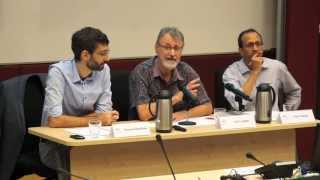
In the Q&A session, Mr Daniel R. Russel answers many challenging questions from the floor on areas such as:

## U.S. building trust and making negotiation with countries like Iraq and North Korea

## What is U.S.'s policy towards Taiwan? Will U.S. eventually recognize Taiwan as a sovereign state?

## If China continues to bulid its military infrastructure in the region, what greater measures will U.S. be willing to do in order to protect its national sovereignty and its alliance ?

## Is there a way for the south china sea problem be solved peacefully?

## How will AIIB impact the U.S.'s interest in the Southeast Asia region?


The Q&A session is hosted by Prof Tommy Koh.

Click here for the lecture: https://youtu.be/rfVYGHhcDQ0


===================================================
Daniel Russel is the Assistant Secretary of State for East Asian and Pacific Affairs and is a career member of the Senior Foreign Service. Prior to his appointment as Assistant Secretary on July 12, 2013, Mr. Russel served at the White House as Special Assistant to the President and National Security Council (NSC) Senior Director for Asian Affairs.

================================================

Visit us
Website: http://lkyspp.nus.edu.sg

Follow us on
Facebook: http://facebook.com/nuslkyspp
Twitter: http://twitter.com/lkysch
LinkedIn University Page: https://www.linkedin.com/edu/school?id=42060
More from this channel
-
 17:41
Lim Swee Say on the labour movement in singapore Q&A part 2/4
-
 11:25
LKYSPP Corporate Video
-
 2:05:22
Seeking Spatial Justice in Asian Cities
-
 1:27:01
The Interaction between Public Policy and Philanthropy: the case of the USA versus India
-
 1:20:20
Soldiers and Diplomacy in Burma
-
 1:12:40
Just Business, Not As Usual
-
 1:26:06
Which Capitalism for the Twenty-first Century?
-
 1:24:51
Against the Consensus: Reflections on the Great Recession