Dr Prakriteswar Santikary, ERT | MIT CDOIQ 2018
278 views · Published 15 August 2018 · 16:21 · Indexed 21 September 2026
Channel: SiliconANGLE theCUBE · 2018 · Science & Technology
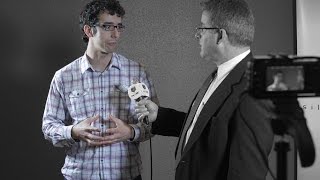
Dr  Prakriteswar Santikary, CDO at ERT returns to the cube to join Peter Burris (@plburris) and Rebecca Knight (@knightrm) live at MIT CDOIQ 2018

#MITCDOIQ #theCUBE

Cutting clinical trials down to size
Clinical trials have historically been complicated and drawn-out endeavors. Selecting suitable sites and subjects, retaining the subjects, and adhering to various regulatory guidelines can be challenging for trial conductors, according to Santikary. And information may come to light at the eleventh hour that casts doubt on previously workable hypotheses. Technology can cut a lot of fat out of the trial process by basically decentralizing it.

“Instead of patients coming to the clinical trial, the clinical trial is going to the patient,” Santikary stated.

Patients don’t need to report to the site in order for researchers to monitor them anymore. There are now FDA-regulated wearable devices that can collect the needed information on study participants. Instead of organizing huge clinical trials, drug companies can set up a number of micro trials and aggregate all of their data together.

“It still needs to be aggregated, but you can get the early results quicker so that you can decide whether you need to keep investing in the trial or not — instead of waiting 10 years only to find out that your trial is going to fail,” Santikary said.

A smaller trial size also helps home in on how illness effects narrowly defined groups of individuals. It can magnify the particular symptoms and drug responses of sufferers. “You don’t run a trial on breast cancer anymore; you just say breast cancer for this patient,” Santikary said.

Some healthcare organizations — the American Heart Association, for example — have built initiatives around patient data. The AHA’s Precision medicine platform drills deep into individuals’ data to help treat and prevent heart disease. Combining data on a patient’s genes, environment and lifestyle provide a clear picture of his or her health.

“That then results in prevention and treatment that’s catered to you as an individual rather than a one-size-fits-all approach,” Laura Stevens, AHA data scientist, recently told theCUBE.

Researchers expect the global market for precision medicine to reach $88.64 billion by 2022.
More from this channel
-
 8:52
Desiree Gosby, Intuit | Grace Hopper Celebration of Women in Computing 2014
8:52
Desiree Gosby, Intuit | Grace Hopper Celebration of Women in Computing 2014
-
 23:16
Joseph Sirosh, Microsoft | BigData New York City 2014
23:16
Joseph Sirosh, Microsoft | BigData New York City 2014
-
 13:53
Tal Segalov - Silicon Valley Spotlight: Mintigo - theCUBE
13:53
Tal Segalov - Silicon Valley Spotlight: Mintigo - theCUBE
-
 23:08
James Hamilton, AWS | AWS re:Invent 2014
23:08
James Hamilton, AWS | AWS re:Invent 2014
-
 6:42
Erick Schonfeld - Primary Data Launch-A-Rama - theCUBE
6:42
Erick Schonfeld - Primary Data Launch-A-Rama - theCUBE
-
 6:19
Isaac Schlueter - Node Summit SF - theCUBE
6:19
Isaac Schlueter - Node Summit SF - theCUBE
-
 11:58
Devon Valencia, Blue Shied | On The Ground 2015
11:58
Devon Valencia, Blue Shied | On The Ground 2015
-
 30:27
#CUBEconversations - FreeStor Launch with FalconStor
30:27
#CUBEconversations - FreeStor Launch with FalconStor