Aleksander Smolar - A portrait of my father (163/201)
79 views · Published 20 December 2018 · 3:17 · Indexed 17 October 2026
Channel: Web of Stories - Life Stories of Remarkable People · 2018 · News & Politics
To listen to more of Aleksander Smolar’s stories, go to the playlist: https://www.youtube.com/playlist?list=PLVV0r6CmEsFwlxPLurqAOCrabBgGrqLA7

Aleksander Smolar (b. 1940) is a Polish writer, political activist and adviser, vice-president of the Institute for Human Sciences and president of the Stefan Batory Foundation. [Listener: Vitek Tracz]

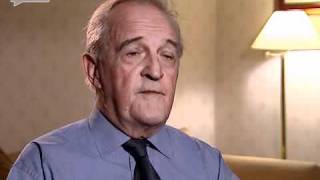
TRANSCRIPT: I associate my childhood principally with my parents so the only portraits I could sketch with a few words would be of my parents and perhaps of my aunt, my mother's sister. Well, my father's sister, too, I've now realised even though she was already living abroad. I saw my father for the first time after the interval the war had caused when he came to Minsk and I've already spoken about that. He came to Minsk and in my mind I associate him with a white horse, and there was a white horse there. He had a very ascetic and severe face. He wasn't tall, he was slender all of his life. He had quite a severe nature and I get the impression from various hints that people, his work colleagues, weren't too fond of him. He was very courageous, a very brave man which was especially apparent during the war among the partisans. Interestingly, when I met his friends later, they were usually friends from that time, namely from the early days of his communist engagement in Poland's underground resistance or from the 10 years he spent in Russia, in the Soviet Union. I didn't meet that many people, their names probably meant something to me – this was his obsession.

He wrote quite a few books, while he was still in Israel, he wrote three autobiographies and he had an obsession which he wasn't able to fulfil – this project of writing about his friends who were no longer alive and who were forgotten. And these were predominantly his friends from the time he'd spent in the Soviet Union, from the time of the war. He wasn't able to do that. He was a very hard man in relation to his private life. As for family life, let's say he wasn't hugely engaged in it. He was largely absent and I attributed that to his work, but I'm not discounting the possibility that it wasn't only because of his work; other people alluded to this later.

This is a personal portrait. I've already mentioned that I had an ambivalent attitude towards him – on the one hand, he was a very hard man, brutal at times. Not that this was ever expressed in physical violence, I don't think that ever happened… I remember one instance – words that were very hurtful. But he would fall silent – I mean, he was capable of staying silent for weeks. He'd be at home and he wouldn't say a word and this kind of silence was very oppressive.
More from this channel
-
 0:44
David Weatherall - Entering medical school
0:44
David Weatherall - Entering medical school
-
 2:22
Baruch Blumberg - The link between some cancers and viruses
2:22
Baruch Blumberg - The link between some cancers and viruses
-
 6:39
Renato Dulbecco - Three Nobels, just one class
6:39
Renato Dulbecco - Three Nobels, just one class
-
 2:26
Marek Edelman - Different criteria for measuring the value of human life
2:26
Marek Edelman - Different criteria for measuring the value of human life
-
 2:45
Jules Engel - So who is responsible for a great animation?
2:45
Jules Engel - So who is responsible for a great animation?
-
 5:02
Eugene Garfield - Retractions in citations
5:02
Eugene Garfield - Retractions in citations
-
 1:23
Donald Hall - Nicknames
1:23
Donald Hall - Nicknames
-
 2:06
François Jacob - The injury that ended my career as a surgeon
2:06
François Jacob - The injury that ended my career as a surgeon