Blanding's Turtles Hunting
982 views · Published 24 July 2013 · 2:19 · Indexed 21 October 2026
Channel: theTurtleRoom · 2013 · Pets & Animals
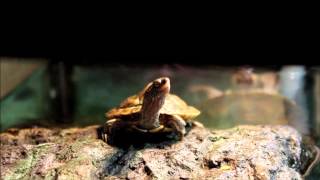
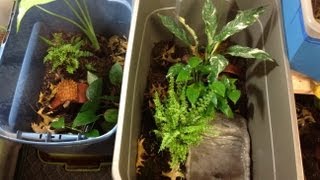
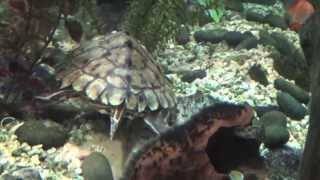
Anthony, of theTurtleRoom.com, shares footage of his Blanding's Turtle (Emydoidea blandingii) project, that will be growing in a few weeks.  These turtles have a great disposition, and due to their yellow chin and notched upper jaw, appear to always be smiling for the camera.  This endangered reptile is often overlooked by hobbyists, and it's cold hardiness is among the strongest in the chelonian world.  For more information on Blanding's Turtles (Emydoidea blandingii), check out Anthony's project page at theTurtleRoom.com: http://trtlrm.com/14czNgf

The Blanding's Turtle, Emydoidea blandingii is a medium sized turtle that is considered to be an endangered species on the state level throughout much of its range. E. blandingii is native to Nova Scotia, Ontario and Quebec in Canada and Illinois, Indiana, Iowa, Maine, Massachusetts, Michigan, Minnesota, Missouri, Nebraska, New Hampshire, New York, Ohio, Pennsylvania, and South Dakota in the United States. It can be identified by its bright yellow throat and chin and notched upper jaw, which gives the impression that the turtle is always smiling. The carapace is brown to black and is domed, but flat towards the top of the shell.

Emydoidea blandingii is "evaluated" by the IUCN Red List as Endangered, "given extensive slow declines of most of its populations from habitat loss and direct removal, accidental mortality and increased predation, and its very long generation time of 36--47 years and slow rate of potential recovery." Blanding's Turtles do not grow quickly, taking upwards of two decades to mature in the wild. It is regarded as being one of the world's most cold tolerant and long lived animals. This longevity has partially been attributed to its decline in so many areas. Habitat destruction and segregation by humans, as well as road mortality and other factors, are a threat to have an even more serious affect on this species, since it can take adults so long to reach maturity. In addition, older specimens have been known to have better success in reproduction, so one mature female, especially an older specimen, lost on the roadway can be extremely harmful to a given population.

For more information on Blanding's Turtles (Emydoidea blandingii), check out Anthony's project page at theTurtleRoom.com: http://trtlrm.com/14czNgf