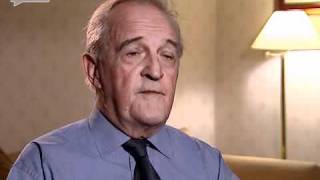
Aleksander Smolar - I'll never be a Pole through and through (199/201)
314 views · Published 20 December 2018 · 3:03 · Indexed 30 September 2026
Channel: Web of Stories - Life Stories of Remarkable People · 2018 · News & Politics
To listen to more of Aleksander Smolar’s stories, go to the playlist: https://www.youtube.com/playlist?list=PLVV0r6CmEsFwlxPLurqAOCrabBgGrqLA7

Aleksander Smolar (b. 1940) is a Polish writer, political activist and adviser, vice-president of the Institute for Human Sciences and president of the Stefan Batory Foundation. [Listener: Vitek Tracz]

TRANSCRIPT: From the time of my emigration, I had been considering the different lifestyles that a person in my situation could choose to follow. So then I systematically reviewed the choices which various people whom I knew, some of whom were my friends, had made. None of them gave me… finding a balance wasn't easy. I saw that despite my engagement with Poland in Polish public affairs which came at a price – there's no doubt about that and I'll say more in a moment – I will never be a Pole through and through because that's not how I'm perceived and apart from that, I am conscious, I have a partial, tragic consciousness… a Jewish consciousness. This gave me a sense, even when I returned to Poland, that there are certain limits to my involvement and I never wanted to make a career for myself. Maybe that's why I didn't. I was an adviser but that was as much as I allowed myself despite having had several offers. So in Poland, I was an adviser, often unpaid apart from in the first year of Tadeusz Mazowiecki's government where I was paid a very modest amount which I felt it would have been tactless to refuse as it would have been a sign that I wasn't fully identifying and engaging. Later, there was the foundation which received funding almost exclusively from outside sources. This gave me a sense of complete independence meaning that I was functioning in a Polish context, issuing statements, talking about public affairs while being completely independent; you could say that this was a significant characteristic of mine since childhood. Namely, an aversion and suspicion of any sort of dependency along with what I've mentioned, that my Russian teacher at school had labelled me a rebel. My choice of an academic career was also to a large extent linked to this. There were also limits to the choice of political career, limits which were there despite my political passions. And this is the paradox: complete independence was always one of my fundamental goals.
More from this channel
-
 0:44
David Weatherall - Entering medical school
0:44
David Weatherall - Entering medical school
-
 2:22
Baruch Blumberg - The link between some cancers and viruses
2:22
Baruch Blumberg - The link between some cancers and viruses
-
 2:26
Marek Edelman - Different criteria for measuring the value of human life
2:26
Marek Edelman - Different criteria for measuring the value of human life
-
 2:45
Jules Engel - So who is responsible for a great animation?
2:45
Jules Engel - So who is responsible for a great animation?
-
 5:02
Eugene Garfield - Retractions in citations
5:02
Eugene Garfield - Retractions in citations
-
 3:08
Russell Fernald - Advice for young scientists: 'The fear of doing anything unconventional'
3:08
Russell Fernald - Advice for young scientists: 'The fear of doing anything unconventional'
-
 2:30
Donald Knuth - Honorary doctorates (86/97)
2:30
Donald Knuth - Honorary doctorates (86/97)
-
 5:14
Donald Knuth - Writing a book about the Bible: "3:16" (72/97)
5:14
Donald Knuth - Writing a book about the Bible: "3:16" (72/97)