Aleksander Smolar - Poland’s activists ignored by their own government (162/201)
188 views · Published 20 December 2018 · 3:17 · Indexed 28 September 2026
Channel: Web of Stories - Life Stories of Remarkable People · 2018 · News & Politics
To listen to more of Aleksander Smolar’s stories, go to the playlist: https://www.youtube.com/playlist?list=PLVV0r6CmEsFwlxPLurqAOCrabBgGrqLA7

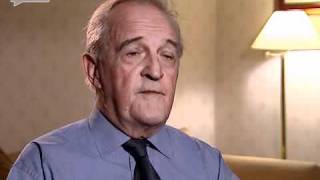
Aleksander Smolar (b. 1940) is a Polish writer, political activist and adviser, vice-president of the Institute for Human Sciences and president of the Stefan Batory Foundation. [Listener: Vitek Tracz]

TRANSCRIPT: Later, I was very dissatisfied that, starting with my government, Mazowiecki's government, nothing was done to award a moral prize, some kind of compensation, to these people. Awards came along much later. I remember that Fr Maciej Zięba, who is my close friend and was at the time head of that Solidarność museum – what's it called… it's not a museum.

[VT] European Solidarity Centre.

That's right. The European Solidarity Centre in Gdańsk. I don't know if it was his idea. A special award was most probably created, a medal, and he presented it in various countries, may be others did, too. In any case, here in Paris I witnessed several French people receiving this award in the embassy, but this was 20 years later. I considered that it was my duty… there was a lack of sensitivity to the surrounding world. I saw it in two dimensions. On the one hand, it was the honouring of those who'd remembered, who gave their time, their energy and often their money to help Poland and the Polish people. On the other, I was shocked that Poland was unable to do what other Baltic states did, for instance, namely invite countless eminent experts to Poland so that they could go there and help to rebuild, remodel, reconstruct, reform in various different areas. Nothing of the kind was happening in Poland. Later, of course, these opportunities disappeared and there were very few people like me who came, returned to Poland in some sense, who worked. There were some but relatively few. This should have been done especially in that emotional moment, in the initial period, it should have been done and it wasn't. It wasn't. It wasn't done when… you could say the Baltic states are tiny and had haemorrhaged their own people not just because of the Soviet purges but earlier, too, through emigration, yet they had an exceptional need of people who had emigrated, people who often were very highly qualified. There were several Prime Ministers and Presidents coming directly from… often already born in America, in Canada or elsewhere. Poland didn't need this. Poland was of course considerably richer but would have benefitted from the numerous specialists who were working in the West following successive waves of immigration, or even from the old Polish ex-pats in America. Well unfortunately, in my opinion this is in some sense an element of the same attitude of being closed to the world. I mean, not even thinking in those categories – I've even referred to this. But I wasn't able to get through which is understandable. These people who were in government were weighed down by so many duties and expectations – they had to make decisions in the many different essential matters they were concerned with and were analysing – inevitably their attention was going to be divided and restricted so it was impossible for them to do everything. In other words, by way of justification, you could say that this was the outcome of that situation.
More from this channel
-
 0:44
David Weatherall - Entering medical school
0:44
David Weatherall - Entering medical school
-
 2:22
Baruch Blumberg - The link between some cancers and viruses
2:22
Baruch Blumberg - The link between some cancers and viruses
-
 2:26
Marek Edelman - Different criteria for measuring the value of human life
2:26
Marek Edelman - Different criteria for measuring the value of human life
-
 2:45
Jules Engel - So who is responsible for a great animation?
2:45
Jules Engel - So who is responsible for a great animation?
-
 3:08
Russell Fernald - Advice for young scientists: 'The fear of doing anything unconventional'
3:08
Russell Fernald - Advice for young scientists: 'The fear of doing anything unconventional'
-
 2:30
Donald Knuth - Honorary doctorates (86/97)
2:30
Donald Knuth - Honorary doctorates (86/97)
-
 5:14
Donald Knuth - Writing a book about the Bible: "3:16" (72/97)
5:14
Donald Knuth - Writing a book about the Bible: "3:16" (72/97)
-
 4:19
Donald Knuth - Re-writing TeX using the feedback I received (67/97)
4:19
Donald Knuth - Re-writing TeX using the feedback I received (67/97)