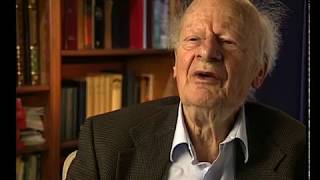
Raoul Coutard - How we developed colour photography (15/179)
725 views · Published 6 September 2017 · 3:08 · Indexed 20 September 2026
Channel: Web of Stories - Life Stories of Remarkable People · 2017 · Film & Animation
To listen to more of Raoul Coutard’s stories, go to the playlist: https://www.youtube.com/watch?v=YYde0bcy2eo&list=PLVV0r6CmEsFz94HTVkL-hi8sRSrIWv0iD

French cinematographer Raoul Coutard (1924-2016) was originally a war photographer. He made his debut as a director of photography in the film 'La Passe du Diable' and became a leading figure in French New Wave cinema. [Listener: Bernard Cohn; date recorded: 2004]

TRANSCRIPT: I was really passionate about technical issues. And I mean at the same time I... that period of photography was very interesting. Because before becoming a soldier, because well it was... it wasn't the beginning of photography since the beginning had been Niépce, well... And the silver photographs, etc. But at the time, photographers were suffering from the fact that they were unhappy not to... to have automatic images... And they would have quite liked to have the same quality that paintings had. So there was a certain amount of systems which enabled them to modify; to intervene directly on the image, as we would do it now with digital. But instead of doing it with a mouse, at the time we did it with a brush.

So first of all, there were carbon paper developments, so it was a special multicoloured paper because it was made of powders mixed with gelatine. And we sensitised them before being able to use them, and then afterwards we developed them with bleach diluted in water. And so with a brush we could remove, reduce the dark patches, change things. There were procedures which enabled us to, while still using special papers that we called bromoil, which enabled... I mean we would get them developed. It's a similar procedure to Technicolor, which means that we developed the system and the photo, and on the paper, depending on the exposure, there was more or less water being retained by the gelatine. And all we had to do was to tap on it with an ink-coated brush, meaning that where there was no water the ink took, and where there was water the ink didn't take. Meaning that we could redo the blacks and whites, and at the same time we could emphasise or wait a bit for the paper to dry a little more to be able to put back colour in places where there wasn't any.

So it was that aspect that the photographers tried... they were miserable. And actually it was quite funny because... I mean we would find a lot of special papers where we are today, rue de Seine, rue de l'Echaudé, rue Jacob. This is where all the manufacturers of these special papers could be found which enabled... special papers and the necessary products. So that's something that has completely disappeared because now photography is based more on instant results. So... and I wonder if in fact, at a certain time, if this progression of photography hasn't inspired, encouraged people, painters to try to find something else, like the impressionists and things like that.
More from this channel
-
 1:32
Murray Gell-Mann - Quarks, mass shell analysis and the bootstrap (102/200)
1:32
Murray Gell-Mann - Quarks, mass shell analysis and the bootstrap (102/200)
-
 1:22
John Maynard Smith - Speculations on the origins of life and Haldane's 3 theorems (102/102)
1:22
John Maynard Smith - Speculations on the origins of life and Haldane's 3 theorems (102/102)
-
 2:00
John Maynard Smith - Experiencing feminism in science (83/102)
2:00
John Maynard Smith - Experiencing feminism in science (83/102)
-
 1:34
Brian Aldiss - Charles Monteith – a kindred spirit (17/79)
1:34
Brian Aldiss - Charles Monteith – a kindred spirit (17/79)
-
 4:00
Hans Bethe - The importance of support for pure science (97/158)
4:00
Hans Bethe - The importance of support for pure science (97/158)
-
 4:06
Hans Bethe - Outbreak of World War II; scientists' efforts (82/158)
4:06
Hans Bethe - Outbreak of World War II; scientists' efforts (82/158)
-
 2:03
Hans Bethe - Short range order vs long range order in the metal alloy (46/158)
2:03
Hans Bethe - Short range order vs long range order in the metal alloy (46/158)
-
 4:15
James Black - Realising a new drug is needed for heart failure (28/33)
4:15
James Black - Realising a new drug is needed for heart failure (28/33)