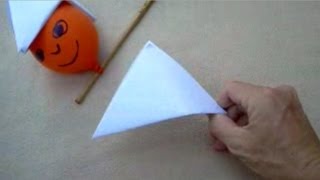
Origami Samurai Battle Helmet - Sombrero de Samurai
752 views · Published 30 April 2015 · 4:17 · Indexed 28 October 2026
Channel: Unair Online · 2015 · Howto & Style
Origami Tutorial on How to Make a Paper Samurai hat
Tutorial DIY de Cómo hacer un sombrero de Samurai

Children's Day, and particularly the Japanese version of this holiday (こどもの日 - Kodomo no hi, previously known as Boys' Day, 端午の節句 - Tango no Sekku).

It takes place on May 5, as part of the Golden Week.

During this day, families hang these samurai helmets (symbolizing strength and honour) in their houses for to celebrate male children, who also wear them

▲▼▲▼▲▼▲▼▲▼▲▼▲▼▲
✂ Paper/Papel:  55 cm x 55 cm
▲▼▲▼▲▼▲▼▲▼▲▼▲▼▲
May 5 is Children's Day, when families celebrate the healthy growth and happiness of children. It became a national holiday in 1948, but it has been a day of celebration in Japan since ancient times.

The fifth day of the fifth month was traditionally called Tango no Sekku and was a festival for boys. Girls have their own festival, called Hina Matsuri (Doll Festival), held on the third day of the third month.

On Children's Day, families with boys fly huge carp-shaped streamers (koinobori) outside the house and display dolls of famous warriors and other heroes inside. The carp was chosen because it symbolizes strength and success; according to a Chinese legend, a carp swam upstream to become a dragon.

Samurai (侍?) were the military nobility of medieval and early-modern Japan.

In Japanese, they are usually referred to as bushi (武士?, [bu.ɕi]) or buke (武家?). According to translator William Scott Wilson: "In Chinese, the character 侍 was originally a verb meaning to wait upon or accompany persons in the upper ranks of society, and this is also true of the original term in Japanese, saburau. In both countries the terms were nominalized to mean "those who serve in close attendance to the nobility", the pronunciation in Japanese changing to saburai. According to Wilson, an early reference to the word "samurai" appears in the Kokin Wakashū (905–914), the first imperial anthology of poems, completed in the first part of the 10th century.

Kabuto (兜, 冑) is a type of helmet first used by ancient Japanese warriors, and in later periods, they became an important part of the traditional Japanese armour worn by the samurai class and their retainers in feudal Japan.
▬▬▬▬▬▬▬▬▬▬▬▬▬
  ▼↓↓↓ SIMILAR VIDEOS  ↓↓↓▼
▬▬▬▬▬▬▬▬▬▬▬▬▬▬
► Origami DIY Tutorial #Soldier's hat - Sombrero de Soldado de #Papel   https://youtu.be/pX2GPBfQ8vs

► Origami Thor's Hat tutorial - #Sombrero de Thor de papel
https://youtu.be/-hMHsMQIpEA

► Origami Bishop Hat Tutorial - Sombrero de Sacerdote de papel
https://youtu.be/d0qNNA14e34

►Origami Bishop's Mitre - #Mitra de Obispo de papel
https://youtu.be/z9Lkex_Jm4s

► Origami Peter Pan Hat  - Gorro de Papel
https://youtu.be/1Z7_eoTayB4

► Origami #Samurai Hat - Sombrero de Samurai
https://youtu.be/R-2y8QLI9sk

► Origami Hat - Sombrero de Papel
https://youtu.be/hdS_eGjmNe8
#origami #samurai #hat
More from this channel
-
 0:53
Origami Hat, DIY Handmade Paper Cap - Sombrero de Papel fácil
-
 1:20
La lección de August ( Wonder ) - Recomendación del libro
-
 1:23
Wonder - A book review
-
 0:56
How to Make an Envelope - Cómo Hacer un Sobre de papel
-
 1:46
Gana Dinero en Youtube con videos
-
 1:30
Koala Bear Spotted in the Bush - Oso Koala Visto en el Bosque, Australia
-
 0:23
Dog sleeping, Cute Cavalier King Charles Spaniel
-
 4:17
How to Make an Origami Paper Christmas Tree 🎄 - Cómo Hacer un Árbol de Papel para Decorar la Navidad