Madagascar. The World of the Lemurs (Documentary Part 5)
3,359 views · Published 21 April 2015 · 6:37 · Indexed 11 October 2026
Channel: Planet Doc Full Documentaries · 2015 · Film & Animation
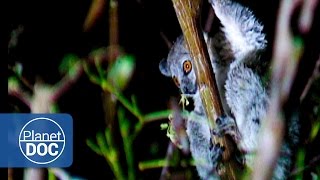
Madagascar is an island located in the Indian Ocean inhabited by only creatures whose origin is still unknown. Lemurs are the most representative animals of Madagascar.
▶ SUBSCRIBE! http://bit.ly/PlanetDoc Full Documentaries every Tuesday, Thursday and Saturday!
▶ Documentary "Madagascar. The Children of Lemuria" http://pdoc.es/MadagascarPL

The invertebrates, reptiles and amphibians of Madagascar already lived here when the island separated from Africa 165 million years ago. The birds and the bats easily flew here, crossing the 400 kilometres of the Mozambique Channel. But the great enigma of the island, to which scientists have still not found an answer, is the origin of its land mammals.

This is a brown lemur, one of the 33 known species of lemur that today live in Madagascar. All lemurs are herbivores and insectivores, and if resources are abundant, they avoid competition, being tolerant and even playful with other species. But this black and white lemur, who just wants a bit of peace and quiet, doesn’t seem to be at all amused by his neighbours.
The lemurs are the most representative animals of Madagascar, and the ones with the most mysterious origin. Lemur is a Latin word that meaning “the spirit of the dead”.

Except for the bats, which flew here, and those introduced by man since he first settled on the island, the origins of Madagascan mammals remains an enigma. All of them are unique in the world, and all of them appeared after Madagascar had separated from the continent, so scientists continue to come up with theories in response to a simple but inexplicable question: how did they get here?

400 kilometres of open sea separate the island from the African continent. This was the challenge for mammals that wanted to reach a land where there was no competition. Today, there are two theories as to how they could have done it: one maintains that between 45 and 26 million years ago, when it is believed the mammals of Madagascar began to evolve independently, there were two land passes in the Mozambique Channel, which the mammals simply crossed on foot. But the most widespread theory speaks of a more exciting adventure: a journey across the Channel on small islands of vegetation or floating branches.
Like this intrepid gecko, small mammals could also have drifted across the sea and colonised the promised land of Madagascar. And those involuntary sailors would have been the origin of the diversity of endemic mammals on the island today.

▶SUBSCRIBE | http://bit.ly/PlanetDoc
▶FULL DOCUMENTARIES | http://bit.ly/Full-Docs
▶NATURE DOCUMENTARIES | http://bit.ly/PlNature

▶FACEBOOK | http://bit.ly/FBPDoc
▶TWITTER | http://bit.ly/TwPDoc
▶TUMBLR | http://bit.ly/TbPlDoc
More from this channel
-
 10:22
The Land of the Giant Bears - The Odyssey | Nature - Planet Doc Full Documentaries
-
 6:10
Paradise in Hell. Sunset | Nature - Planet Doc Full Documentaries
-
 4:11
Shaba Leopard | Wild Animals
-
 6:06
Madagascar. The World of the Lemurs (Documentary Part 7)
-
 6:24
Madagascar. The World of the Lemurs (Documentary Part 8)
-
 2:22
Sea Predators | Express Animal Documentaries
-
 6:29
The Unicorn of India. The Legend | Nature
-
 6:17
The Unicorn of India. The Taste of a Legend | Nature