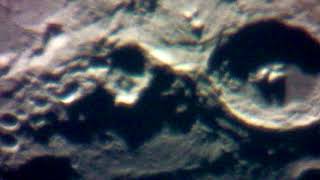
sinus iridum moon
471 views · Published 29 April 2018 · 5:04 · Indexed 29 September 2026
Channel: John Lenard Walson · 2018 · People & Blogs
sinus iridum  mountain On the Moon |ˈmaʊntɪn| no bridges
1 a large natural elevation of the  surface rising abruptly from the surrounding level;
 a large steep hill: Sinus Iridum (Latin for "Bay of Rainbows") is a plain of basaltic lava that forms a northwestern extension to the Mare Imbrium on Earth's moon. It is surrounded from the northeast to the southwest by the Montes Jura range. Close to the bay in the range in the northwest is the crater Bianchini; west of the bay is the crater Sharp. The protruding part of the range at the southwest end is named Promontorium Heraclides, while that at the northeast end is called Promontorium Laplace. This bay and the surrounding mountains is considered one of the most beautiful features on the Moon, and is a favorite among lunar observers.

Sinus Iridum is formed from the remains of a large impact crater, which was subsequently flooded with basaltic lava, inundating the "sea" wall. The bay itself does not contain any notable impact craters, but does include the satellite crater Heraclides E in the south, Laplace A along the eastern edge, and Bianchini G in the north. The surface is level, but is marked by a number of wrinkle ridges (dorsa).

The selenographic coordinates of the bay's center are 45.01° N, 31.67° W, and the diameter is 249 km.[1] https://en.wikipedia.org/wiki/Sinus_Iridum#/media/File:Wac_sinus_iridum300m.png