Why do guidelines allow orange juice to contain more cesium-137 than bottled water?
1,059 views · Published 23 April 2014 · 1:01 · Indexed 30 September 2026
Channel: Canadian Nuclear Safety Commission - CNSC · 2014 · Science & Technology
The CNSC has launched a video series to address some of the many questions asked by the public following the Fukushima accident. In these videos, CSNC staff experts answer common health-related questions in simple language.

TRANSCRIPT

The first thing to keep in mind here is that people are less likely to drink as much orange juice as water, so the limits are not as restrictive for orange juice.

Assumptions like these are made when setting guidelines for limits for radionuclides, like cesium.

Food, water and juices are sorted into different categories based on these assumptions.

Because water and orange juice are in different categories, the limits for each are different.

Overall, the guidelines for all food and drink, which include limits for radionuclides, are designed to protect human health.

Want to learn more about nuclear safety? Subscribe and turn on notifications so that you never miss a thing!
More from this channel
-
 6:50
CNSC Information Session -- Video 2: CNSC's Regulatory Framework
6:50
CNSC Information Session -- Video 2: CNSC's Regulatory Framework
-
 15:50
(2013/12/10) - 2012 CNSC Staff Report on the Performance of GE Hitachi Nuclear Energy Canada Inc.
15:50
(2013/12/10) - 2012 CNSC Staff Report on the Performance of GE Hitachi Nuclear Energy Canada Inc.
-
 12:02
(2013/12/10) - Presentation by Andrew Cash, Member of Parliament for Davenport
12:02
(2013/12/10) - Presentation by Andrew Cash, Member of Parliament for Davenport
-
 26:50
(2014/02/06) - Counterfeit, Fraudulent and Suspect Items
26:50
(2014/02/06) - Counterfeit, Fraudulent and Suspect Items
-
 31:47
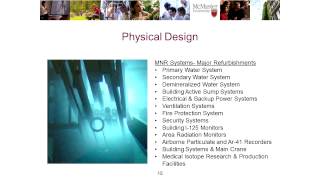
McMaster University Hearing (2014/05/08) - McMaster University Presentation
31:47
McMaster University Hearing (2014/05/08) - McMaster University Presentation
-
 50:24
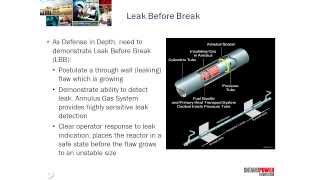
Pickering Hearing (2014/05/07) - OPG Presentation
50:24
Pickering Hearing (2014/05/07) - OPG Presentation
-
 33:30
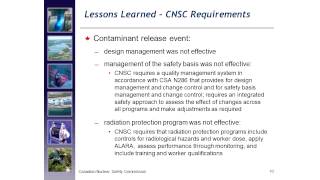
OPG DGR Hearing - CNSC presentation about the relevance of the Waste Isolation Pilot Plant
33:30
OPG DGR Hearing - CNSC presentation about the relevance of the Waste Isolation Pilot Plant
-
 19:28
OPG DGR Hearing - CNSC presentation about relative risk analysis of alternative means
19:28
OPG DGR Hearing - CNSC presentation about relative risk analysis of alternative means