Cauliflowers on Mars could be a sign of ancient alien life
253 views · Published 3 February 2016 · 4:35 · Indexed 24 October 2026
Channel: Healing Frequencies · 2016 · Entertainment
‘Cauliflowers’ on Mars could be a sign of ancient alien life: Unusual shape may have been caused by microbes, say scientists
Patterns spotted by the Spirit rover in 2008 in Mars' Gusev crater
Scientists say the 'cauliflowers' may have been created by past life
Point to how  microbes created similar shapes in Chile's Atacama Desert
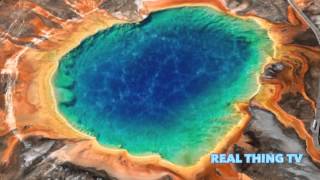
Other areas with similar cauliflower patterns can be found in Yellowstone National Park in Wyoming and the Taupo Volcanic Zone in New Zealand.

Unusual 'cauliflower' formations on Mars have provided scientists with the latest clues to ancient life on the red planet.

The strange patterns were spotted by the Spirit rover in 2008 while it was studying a mineral called opaline silica inside Mars's Gusev crater.

Scientists aren't sure what created the shapes, but a pair of researchers have recently claimed clues to their formation could be found on Earth.

Steven Ruff and Jack Farmer of Arizona State University believe the silica might have been shaped by microbes.

The Smithsonian reported on their results, which were announced at a meeting of the American Geophysical Union in December.

The pair suggest the 'cauliflowers' may have been created by past life on the red planet in a similar way to how ancient microbes have shaped Earth's landscape.

The chances of finding life on the red planet got smaller last month.

Researchers have been drilling in the McMurdo Dry Valleys in Antarctica in search of microbes, as this is the only place on Earth that resembles the permafrost on Mars.

But after years of work and no signs of life, they believe this is the same outcome other researchers will face when analyzing the northern polar area region of Mars at the Phoenix landing site.

'Some of the coldest and driest permafrost soils on earth are located in the high-elevation McMurdo Dry Valleys of Antarctica, but little is known about the permafrost microbial communities other than that microorganisms are present in these valleys,' reads the study published by McGill University in ISME Journal.

'Our results contrast with reports from the lower-elevation Dry Valleys and Arctic permafrost soils where active microbial populations are found, suggesting that the combination of severe cold, aridity, oligotrophy of University Valley permafrost soils severely limit microbial activity and survival.'

At 3,000 feet, the Atacama is 15 million years old and 50 times more arid than California's Death Valley

Scientists use this region as an analog to the Gusev crater, where scientists think geysers once rose from the red planet's surface.

Here, similar cauliflower formations - also known as 'micro-digitate silica protrusions' - have been been spotted.

Other areas with similar cauliflower patterns can be found in Yellowstone National Park in Wyoming and the Taupo Volcanic Zone in New Zealand.

'I don't think there is any way around using modern Earth analogs to test where Martian microbes may be found,' Kurt Konhauser of the University of Alberta told the Smithsonian.
More from this channel
-
 4:24
Yellowstone about to blow? Scientists warns
-
 2:27
Chinese regulator suspends circuit breakers
-
 3:05
Mysterious Snail object sliding across dwarf planet's heart
-
 5:58
Oregon Standoff Continues
-
 2:21
Germany out of control teens arrested for rape of girl amid more attacks
-
 1:44
Mysterious Object Spinning up Kosovan town
-
 2:37
National Guard called up to help in Flint, Michigan water crisis
-
 4:26
Ten U S sailors captured by Iran as Revolutionary Guard RELEASES them