A Little Night Music - Ode To Billie Joe (Fusion, Bobbie Gentry Cover)
2,507 views · Published 1 June 2017 · 7:47 · Indexed 20 September 2026
Channel: CoverVerse · 2017 · Music
From '' Sitting Ducks '' Label: Night Music Productions – NM 6902 Format: Vinyl, LP, Album Country: US Released: 1985 Tracklist A1 Dancing At The Zoo A2 Paul And Audrey A3 Baby Sweet Baby A4 Moment's Notice B1 'Rangutang B2 Ode To Billy Joe B3 Hey Snake Lead Vocals – Nate Pruitt Tenor Saxophone, Soprano Saxophone – Bob Johnson Keyboards – Ed Manning Drums – Dave Silliman Acoustic Guitar, Guitar – Rick Vandivier Backing Vocals, Bass – Norbert Pittman Recorded At – The Music Annex Mastered At – Fantasy Studios Mastered By – George Horn Producer – Ed Manning Engineer – Roger Wiersema 🎵 [SONG INFO] "Ode to Billie Joe" is a 1967 song written and recorded by Bobbie Gentry (born July 27, 1944), a singer-songwriter from Chickasaw County, Mississippi. The single, released in late July, was a number-one hit in the United States, and became a big international seller. The song is ranked No.419 on Rolling Stone's list of "the 500 Greatest Songs of All Time". The recording of "Ode to Billie Joe" generated eight Grammy nominations, resulting in three wins for Gentry and one win for arranger Jimmie Haskell. Covers An instrumental version has been recorded by Lou Donaldson. It appears on Ellen McIlwaine's 1972 album Honky Tonk Angel and 1998 compilation Up from the Skies: The Polydor Years. Nancy Wilson covered it on her 1968 album Welcome To My Love. Jazz pianist Jaki Byard recorded an instrumental version in 1981 for his album To Them - To Us. In 1995 Sinead O'Conner covered it for the Help: Bosnian Relief album. In 1999, Tom Scott and the LA Express recorded a version on their Smokin' Section album with Patty Smyth (from the band Scandal) on vocals. "Ode to Billie Joe" was also covered as an instrumental by Danny Gatton and Buddy Emmons, released in the 1980s on the album and CD Redneck Jazz Explosion. Adaptations The song's popularity proved so enduring that in 1976, nine years after its release, Warner Bros. commissioned author Herman Raucher to adapt it into a novel and screenplay, Ode to Billy Joe. The poster's tagline, which treats the film as being based on a true story and even gives a date of death for Billy (June 3, 1953), led many to believe that the song was based on actual events. In Raucher's novel and screenplay, Billy Joe kills himself after a drunken homosexual experience, and the object thrown from the bridge is the narrator's ragdoll. The film, directed and produced by Max Baer, Jr, was released in 1976, starring Robby Benson and Glynnis O'Connor. Billy Joe's story is analyzed in Professor John Howard's history of gay Mississippi entitled Men Like That: A Queer Southern History as an archetype of what Howard calls the "gay suicide myth". Translations In 1967 American/French singer-songwriter Joe Dassin had much success with a French translation of the song titled "Marie-Jeanne", that tells exactly the same story almost word for word, only with the characters reversed. The narrator is one of the sons of the household, and the character who committed suicide is a girl named Marie-Jeanne Guillaume. In 1967, a Swedish translation by Olle Adolphson titled "Jon Andreas visa" was recorded by Siw Malmkvist. It is faithful to the story in "Ode to Billie Joe", but has changed the setting to rural Sweden. The name of Billie Joe has been changed to the Swedish name Jon Andreas. A German translation titled "Billy Joe McAllister" was released in 1978 by Wencke Myhre. #alittlenightmusic #odetobilliejoe #fusionmusic #soul #bobbiegentry
More from this channel
-
 5:02
No Eleven - Pale Blue Eyes (Lo-Fi, The Velvet Underground Cover)
5:02
No Eleven - Pale Blue Eyes (Lo-Fi, The Velvet Underground Cover)
-
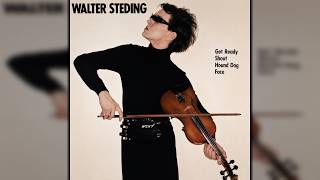 2:38
Walter Steding - Shout (Experimental, The Isley Brothers Cover)
2:38
Walter Steding - Shout (Experimental, The Isley Brothers Cover)
-
 1:53
Dogs - Train Kept A-Rollin' (Garage Punk, Tiny Bradshaw Cover)
1:53
Dogs - Train Kept A-Rollin' (Garage Punk, Tiny Bradshaw Cover)
-
 4:13
Kevin Dunn And The Regiment Of Women - Somewhere Over The Rainbow (Minimal version)
4:13
Kevin Dunn And The Regiment Of Women - Somewhere Over The Rainbow (Minimal version)
-
 2:04
Jo Ann Castle - When My Baby Smiles At Me (Ragtime/Instrumental, Bill Munro)
2:04
Jo Ann Castle - When My Baby Smiles At Me (Ragtime/Instrumental, Bill Munro)
-
 3:23
Luzviminda Reyes - Spinning Wheel (Soul/Lounge - Blood, Sweat & Tears Cover)
3:23
Luzviminda Reyes - Spinning Wheel (Soul/Lounge - Blood, Sweat & Tears Cover)
-
 1:33
Disneyland - Gilligan’s Island (Sherwood Schwartz, George Wyle)
1:33
Disneyland - Gilligan’s Island (Sherwood Schwartz, George Wyle)
-
 3:29
The Strings - Hoochie Coochie Man (Muddy Waters Cover)
3:29
The Strings - Hoochie Coochie Man (Muddy Waters Cover)