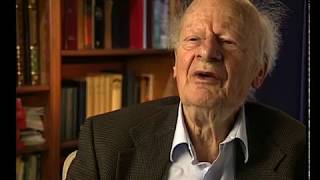
Donald Hall - Poetry readings: 'Kicking the Leaves' (103/111)
2,891 views · Published 27 July 2017 · 7:15 · Indexed 20 September 2026
Channel: Web of Stories - Life Stories of Remarkable People · 2017 · Entertainment
To listen to more of Donald Hall’s stories, go to the playlist: https://www.youtube.com/playlist?list=PLVV0r6CmEsFyDI47p9qm-ZJtApB_9leMl

US Poet Laureate Donald Hall (1928-2018) published essays and anthologies of both poetry and prose including "String too Short to be Saved: Recollections of Summers on a New England Farm", and "Ox-Cart Man", a children's book which won the Caldecott Medal. [Listener: Kendel Currier; date recorded: 2005]

TRANSCRIPT: 'Kicking The Leaves'. This is a poem I wrote in Michigan, just before Jane and I moved to... to the house in New Hampshire.  And I knew we were going to come and camp out at any rate, and the poem really seems to know that I am going to be moving in here and living here. It's a kind of farewell to the old life, looking forward to the new.

Kicking the leaves, October, as we walk home together
from the game, in Ann Arbor,
on a day the color of soot, rain in the air;
I kick at the leaves of maples,
reds of seventy different shades, yellows
like old paper; and poplar leaves, fragile and pale;
and elm leaves, flags of a doomed race.
I kick at the leaves, making a sound I remember
as the leaves swirl upward from my boot,
and flutter; and I remember
Octobers walking to school in Connecticut,
wearing corduroy trousers that swished
with a sound like leaves; and a Sunday buying
a cup of cider at a roadside stand
on a dirt road in New Hampshire; and kicking the leaves,
autumn 1955 in Massachusetts, knowing
my father would die when the leaves were gone.

Each fall in New Hampshire, on the farm
where my mother grew up, a girl in the country,
my grandfather and grandmother
finished the autumn work, taking the last vegetables in
from the cold fields, canning, storing roots and apples
in the cellar under the kitchen. Then my grandfather
raked leaves against the house
as the final chore of autumn.
One November I drove up from college to see them.
We pulled big rakes, as we did when we hayed in summer,
pulling the leaves against the granite foundations
around the house, on every side of the house,
and then, to keep them in place, we cut spruce boughs
and laid them across the leaves,
green on red, until the house
was tucked up, ready for snow
that would freeze the leaves in tight, like a stiff skirt.
Then we puffed through the shed door,
taking off boots and overcoats, slapping our hands,
and sat in the kitchen, rocking, and drank
black coffee my grandmother made,
three of us sitting together, silent, in gray November.

One Saturday when I was little, before the war,
my father came home at noon from his half day at the office
and wore his Bates sweater, black on red,
with the crossed hockey sticks on it, and raked beside me
in the back yard, and tumbled in the leaves with me,
laughing, and carried me, laughing, my hair full of leaves,
to the kitchen window
where my mother could see us, and smile, and motion
to set me down, afraid I would fall and be hurt.

Kicking the leaves today, as we walk home together
from the game, among crowds of people
with their bright pennants, as many and bright as leaves,
my daughter’s hair is the red-yellow color
of birch leaves, and she is tall like a birch,
growing up, fifteen, growing older; and my son
flamboyant as maple, twenty,
visits from college, and walks ahead of us, his step
springing, impatient to travel
the woods of the earth. Now I watch them
from a pile of leaves beside this clapboard house
in Ann Arbor, across from the school
where they learned to read,
as their shapes grow small with distance, waving,
and I know that I
diminish, not them, as I go first
into the leaves, taking
the way they will follow, Octobers and years from now.

This year the poems came back, when the leaves fell.
Kicking the leaves, I heard the leaves tell stories,
remembering and therefore looking ahead, and building
the house of dying. I looked up into the maples
and found them, the vowels of bright desire.
I thought they had gone forever
while the bird sang  I love you I love you
and shook its black head
from side to side, and its red eye with no lid,
through years of winter, cold
as the taste of chickenwire, the music of cinderblock.

Kicking the leaves, I uncover the lids of graves.
My grandfather died at seventy-seven, in March
when the sap was running; and I remember my father
twenty years ago,
coughing himself to death at fifty-two in the house
in the suburbs. Oh, how we flung
leaves in the air! How they tumbled and fluttered around us,
like slowly cascading water, when we walked together
in Hamden, before the war, when Johnson’s Pond
had not surrendered to the houses, the two of us
hand in hand, and in the wet air the smell of leaves
burning;
and in six years I will be fifty-two.

Now I fall, now I leap and fall
to feel the leaves crush under my body, to feel my body... [...]

Read the full transcript at https://www.webofstories.com/play/donald.hall/103
More from this channel
-
 1:32
Murray Gell-Mann - Quarks, mass shell analysis and the bootstrap (102/200)
1:32
Murray Gell-Mann - Quarks, mass shell analysis and the bootstrap (102/200)
-
 1:22
John Maynard Smith - Speculations on the origins of life and Haldane's 3 theorems (102/102)
1:22
John Maynard Smith - Speculations on the origins of life and Haldane's 3 theorems (102/102)
-
 2:00
John Maynard Smith - Experiencing feminism in science (83/102)
2:00
John Maynard Smith - Experiencing feminism in science (83/102)
-
 1:34
Brian Aldiss - Charles Monteith – a kindred spirit (17/79)
1:34
Brian Aldiss - Charles Monteith – a kindred spirit (17/79)
-
 4:00
Hans Bethe - The importance of support for pure science (97/158)
4:00
Hans Bethe - The importance of support for pure science (97/158)
-
 4:06
Hans Bethe - Outbreak of World War II; scientists' efforts (82/158)
4:06
Hans Bethe - Outbreak of World War II; scientists' efforts (82/158)
-
 2:03
Hans Bethe - Short range order vs long range order in the metal alloy (46/158)
2:03
Hans Bethe - Short range order vs long range order in the metal alloy (46/158)
-
 4:15
James Black - Realising a new drug is needed for heart failure (28/33)
4:15
James Black - Realising a new drug is needed for heart failure (28/33)