Up close roe triplets - too cute to shoot
4,268 views · Published 18 February 2013 · 5:31 · Indexed 30 September 2026
Channel: Fieldsports Channel · 2013 · Sports
Out after a fallow buck Sporting Shooter editor Dom Holtam witnesses a magical wildlife moment. With fieldcraft and a bit of luck a mature roe doe and her triplets graze to within just a few yards of him and the camera. We get some exceptional footage and nothing for the larder, but it's not always about pulling the trigger!

This film was first shown in Fieldsports Britain, episode 149. To watch the whole show go to http://Fcha.nl/fieldsportsbritain149

▶ Join the Fieldsports Nation and fund our fight for fieldsports in the media http://Fcha.nl/fieldsportsnation - for full details https://www.youtube.com/channel/UCfoE... for YouTube membership http://www.patreon.com/fieldsportscha... for the same via Patreon To become a more structural shareholder, visit http://fieldsports.envestry.com

▶ Sign up for our weekly email newsletter http://Fcha.nl/register

▶ Fieldsports Shop Go to http://fieldsports.shop

We’re proud to promote enjoyment of fieldsports and the countryside. There are three guiding principles to everything we do on Fieldsports Channel:
▶ Hunt, shoot and fish responsibly
▶ Respect the quarry
▶ Ensure a humane, clean and quick kill
Take part in nature. Join the Fieldsports Nation https://Fcha.nl

Risk warning: investments of this nature carry risks to your capital as well as potential rewards. Approved as a financial promotion by Envestors Limited.  Which is authorised and regulated by the Financial Conduct Authority (No. 07236828.)

Why shoot deer?
There are more than two million red, roe, fallow, sika, muntjac and Chinese water deer in Britain’s countryside and semi-urban areas, the highest level for 1,000 years. Numbers have doubled since 1999, according to the Deer Initiative, the UK government’s deer agency.
Deer are an attractive and an important part of our wildlife. However, they have no natural predator in the UK so numbers must be sensibly and strategically managed to keep them in balance with their habitat and to prevent damage to crops, trees, woodland flora, gardens and other wildlife.
Deer cause £4.5 million-worth (Forestry Commission Scotland) of damage to plantations and other commercial woodlands in Scotland. Crop damage is estimated at £4.3m a year according to DEFRA, with the greatest damage on cereal crops in east and south-west England.
More than 8,000 hectares (Parliamentary Office for Science and Technology) of woodland with SSI status is currently in ‘unfavourable’ or ‘recovering’ condition due to deer impacts such as browsing and fraying. Deer can also influence the variety of wildlife in woodlands and other habitats by altering structural and plant species diversity. According to the University of East Anglia’s Dr Paul Dolman, that has resulted in a 50% decline in woodland bird numbers where deer are present, impacting particularly on nightingales, blackcaps, chiffchaffs and warblers.
Deer are susceptible to Bovine TB and may be responsible for the transmission of TB to cattle. They are also the likely driver behind the UK’s increasing tick population (Scharlemann et al 2008).
Happily, venison is a delicious meat. It is wild, natural and free range, and – almost fat-free – it is one of the healthiest meats available today. Results from research commissioned by the Game-to-Eat campaign (Leatherhead Food International Research 2006) suggest that there are real health benefits to eating game. Venison is high in protein, low in saturated fatty acids and contains higher levels of iron than any other red meat.
More from this channel
-
 5:17
Ballistics tips with Keith Poyser, part seven
5:17
Ballistics tips with Keith Poyser, part seven
-
 4:18
Taylor's Travels: the grey geese
4:18
Taylor's Travels: the grey geese
-
 3:54
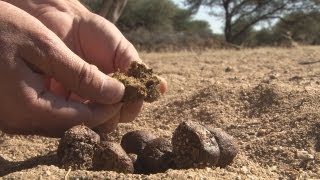
How to track African game
3:54
How to track African game
-
 1:30
Browning Owners Club day 2012
1:30
Browning Owners Club day 2012
-
 7:28:24
Wildlife Diseases and Conservation - a one day symposium
7:28:24
Wildlife Diseases and Conservation - a one day symposium
-
 6:00
Bloopers 2012
6:00
Bloopers 2012
-
 2:45
Restocking a trout fishery with rainbows and brownies
2:45
Restocking a trout fishery with rainbows and brownies
-
 8:13
Headhunter Chronicles' Macnab - behind the scenes
8:13
Headhunter Chronicles' Macnab - behind the scenes