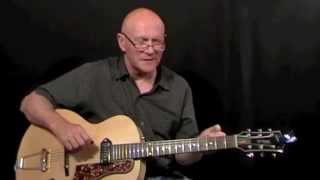
How to play great guitar solos
1,888 views · Published 7 October 2016 · 6:39 · Indexed 12 November 2026
Channel: New Secret Guitar Teacher · 2016 · Music
Solo on guitar. How to play a great guitar solo. How to solo on guitar. Soloing is different to jamming!
Sample lesson from the Secret Guitar Teacher Site: http://secretguitarteacher.com/youtube/ssb.php?lp_id=1745

Video script:
So far, all the lessons I have made about improvising on guitar have encouraged you to spend as much time as possible jamming, either with other musicians or along to backing tracks. But it is very important to understand that there are some key differences between just jamming over a particular chord progression and delivering a great solo.

Lets start our detailed exploration of the subject of guitar soloing by looking at some of the practicalities that apply to live performance. And you'll notice that these are all things that really need to be addressed before the gig even gets nder way.

The entry into the solo is all-important. Especially in a live performance situation, you want to let the audience know, in no uncertain terms, that you are now taking centre stage.

From a practical point of view then, it is essential to make sure your guitar sound level, tone and fx settings are prepared a few seconds ahead of when you need to launch into the solo.

This is where foot pedals come in useful. Supposing I am playing a blues gig in a typical pub or club setting using just my amp without any extra fx, as I normally would be, to be honest.

At the sound check stage I will have set up the extra channels on my amp in preparation for the first couple of solos I know I am likely to play.  So I have the normal channel set up for rhythm playing .  First Overdrive channel set up say with a bit of blues crunch . And the second overdrive channel with maximum sustain for rockier sounding passages .

If you have little experience with live performance, it is vital that you spend time practicing switching from one sound to another. So you have the normal channel selected during the verse while you are playing back-up rhythm guitar maybe something like this.  Then, just before your solo cue, you flick the footswitch and also make any adjustments to the settings on your guitar
 ....all in good time to make your entry into the solo.

That's actually quite a lot to coordinate in the heat of the moment and that is why it needs practicing so you don't end up looking and sounding like a complete novice on the night!

Of course, I have only shown you an example using the rig I typical gig with. You may use a programmable multi fx pedal like one of these...

But the same principle applies, make sure you set your sound options carefully at the sound check stage - just because they sounded fine when you were practicing in your own home, doesn't mean they'll be set right for the space you are going to be playing in live. Also, remember to take account of the way the acoustics of a space alter as it fills up with people.

For larger gigs, where you are miked up through the pa system and have the luxury of a sound engineer working the  desk, it is always worth having a word with them beforehand.

I usually ask them if it is ok for me to give them a nod just prior to a solo so that they are ready to crank up my volume if needed. Playing to larger audiences in larger halls, and especially if playing in the open air, it is absolutely essential to be able to rely on someone out front to control your level as it becomes impossible to monitor it accurately from on stage.

So those are a few practical things to consider in terms of up front preparation, that can make all the difference in the world between your solo being the main event of the night... or something that no one even notices ever happened!

In the next lesson we'll discuss the timing and phrasing elements of making an effective entry into your solo - one that is guaranteed to catch the audiences and get the solo of to the best possible start.
More from this channel
-
 7:58
Lead Guitar Intermediate Course Intro
-
 15:19
Understanding Key Signatures - Part 7
-
 15:13
Key-Specific Improvising - an overview
-
 11:07
Come As You Are (Intro). Beginners Guitar Lesson
-
 7:09
Electric Guitar for Beginners - Nice notes, not nasty noises
-
 9:15
Diminished Chords - How to Use Them on the Guitar (Part 2)
-
 6:15
Diminished Chords - How to Improvise Over Them on Guitar
-
 6:38
There is only one chord shape on the guitar - Part 2