Fully articulated rotor. Further testing.
1,540 views · Published 21 September 2010 · 4:40 · Indexed 29 October 2026
Channel: RCmags · 2010 · Gaming
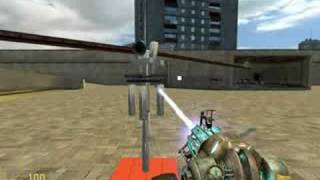
Further tweaking simplified the rotor. Blade flapping is directly limited via av. ballsocket, the limiting levers were removed. To coax with lead/lag issues, an expression 2 (is invisible in the video) which turns the rotor is placed in-line with the root of the rotor blades . The blades are av. ballsocketed to it. This removes major vibrations and simplifies the rotor.

In order to increase stability and cancel out dissymmetry of lift. The blades can flap independently  from each other under a certain angle which is less then the maximum flapping angle of each. This greatly increased stability and performance. They also present flapping induced washout which can be seen in the video.

A fully articulated system offers three advantages from a semi-rigid:

- Increased cyclic authority (for the same swashplate inclination, more torque is developed).

Increased lateral flight stability (During lateral flight, the craft will be less prone to roll without pilot input).

- Increased hover stability (due to independent flapping, the blades will turn the rotor disk into a cone. This acts as dihedral on a airplane. If the helicopter is not level with the horizon, one blade will push more against gravity. The drawback of this is lateral movement, as the blades will also push sideways)