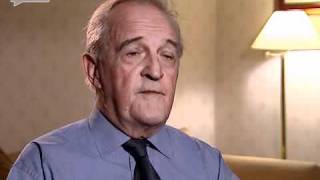
Aleksander Smolar - A revisionist’s dilemma (99/201)
123 views · Published 18 December 2018 · 2:25 · Indexed 28 September 2026
Channel: Web of Stories - Life Stories of Remarkable People · 2018 · News & Politics
To listen to more of Aleksander Smolar’s stories, go to the playlist: https://www.youtube.com/playlist?list=PLVV0r6CmEsFwlxPLurqAOCrabBgGrqLA7

Aleksander Smolar (b. 1940) is a Polish writer, political activist and adviser, vice-president of the Institute for Human Sciences and president of the Stefan Batory Foundation. [Listener: Vitek Tracz]

TRANSCRIPT: Well, you could say that I was signing up for... at that time, I was already signing up for that trend which is officially known as revisionist. In other words, it was obvious to me that communism couldn't survive in its present form. At the same time, I was convinced – and this conviction lasted a long time – that there was no alternative. This wasn't just because the Soviet Union was right next door, it was also for reasons you could call philosophical-institutional. I remember I was convinced that social ownership was superior to private ownership. A reversal seemed impossible to me and to be honest, I was still convinced of this in the '70s and '80s. I remember an article by an acclaimed liberal-conservative academic, a specialist in political science, the eminent Samuel Huntington who wrote a piece somewhere in the mid-'80s called 'The Future of Democracy'.  We reprinted it in 'Aneks' – that was the publication that we produced. The thing that really struck me was that in his text about the future of democracy, he devoted only one paragraph to the whole communist world – it was a very long article – saying that in these countries, democracy was and will always be impossible because it cannot exist in the absence of private ownership. Yet it's impossible to return to private ownership. In economics, we use the term 'ratchet effect'. A ratchet prevents a cogged wheel from reversing so the wheel can only go forward, rotating in the same direction, so we could say that here we had this historical effect of a ratchet. Even when I knew that this was a less efficient economy, that it was often unjust and that it is a contributing factor to dictatorship, in some sense I still couldn't believe it was possible to return to private ownership. In any case, I was convinced…
More from this channel
-
 0:44
David Weatherall - Entering medical school
0:44
David Weatherall - Entering medical school
-
 2:22
Baruch Blumberg - The link between some cancers and viruses
2:22
Baruch Blumberg - The link between some cancers and viruses
-
 2:26
Marek Edelman - Different criteria for measuring the value of human life
2:26
Marek Edelman - Different criteria for measuring the value of human life
-
 2:45
Jules Engel - So who is responsible for a great animation?
2:45
Jules Engel - So who is responsible for a great animation?
-
 3:08
Russell Fernald - Advice for young scientists: 'The fear of doing anything unconventional'
3:08
Russell Fernald - Advice for young scientists: 'The fear of doing anything unconventional'
-
 2:30
Donald Knuth - Honorary doctorates (86/97)
2:30
Donald Knuth - Honorary doctorates (86/97)
-
 5:14
Donald Knuth - Writing a book about the Bible: "3:16" (72/97)
5:14
Donald Knuth - Writing a book about the Bible: "3:16" (72/97)
-
 4:19
Donald Knuth - Re-writing TeX using the feedback I received (67/97)
4:19
Donald Knuth - Re-writing TeX using the feedback I received (67/97)