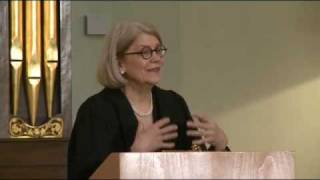
Prof. Steve Furber: Building brains
4,313 views · Published 24 May 2012 · 50:17 · Indexed 11 October 2026
Channel: The University of Edinburgh · 2012 · Science & Technology
When his concept of the universal computing machine finally became an engineering reality, Alan Turing speculated on the prospects for such machines to emulate human thinking. Although computers now routinely perform impressive feats of logic and analysis, such as searching the vast complexities of the global internet for information in a second or two, they have progressed much more slowly than Turing anticipated towards achieving normal human levels of intelligent behaviour, or perhaps "common sense". Why is this?

Perhaps the answer lies in the fact that the principles of information processing in the brain are still far from understood. But progress in computer technology means that we can now realistically contemplate building computer models of the brain that can be used to probe these principles much more readily than is feasible, or ethical, with a living biological brain.

Presented by Professor Steve Furber , School of Computer Science, Manchester University

Recorded on Friday 11 May 2012 at the Informatics Forum, The University of Edinburgh.

The Turing Research Symposium was organised by the Royal Society of Edinburgh and the University of Edinburgh School of Informatics in partnership with SICSA and supported by Cambridge University Press.
More from this channel
-
 43:27
Meet the Crew of Space Shuttle Discovery
43:27
Meet the Crew of Space Shuttle Discovery
-
 1:32:20
Soldier Meets Citizen: a public debate
1:32:20
Soldier Meets Citizen: a public debate
-
 0:51
Interview with Professor Peter Higgs
0:51
Interview with Professor Peter Higgs
-
 3:09
Edinburgh launches project to tackle pneumonia
3:09
Edinburgh launches project to tackle pneumonia
-
 0:48
Gene study offers clues for drug development
0:48
Gene study offers clues for drug development
-
 4:51
Links to Africa highlighted
4:51
Links to Africa highlighted
-
 1:19:11
Diana Eck - Religious Views of Religious Pluralism II
1:19:11
Diana Eck - Religious Views of Religious Pluralism II
-
 1:11:24
Diana Eck - The Pluralism Within
1:11:24
Diana Eck - The Pluralism Within