How to Solve Probability Problems in Genetics
219 views · Published 29 December 2017 · 7:02 · Indexed 19 October 2026
Channel: Nikolay's Genetics Lessons · 2017 · Education
In mathematics, the factorial of a non-negative integer n, denoted by n!, is the product of all positive integers less than or equal to n. For example,

{\displaystyle 5!=5\times 4\times 3\times 2\times 1=120.} {\displaystyle 5!=5\times 4\times 3\times 2\times 1=120.}
The value of 0! is 1, according to the convention for an empty product.[1]

The factorial operation is encountered in many areas of mathematics, notably in combinatorics, algebra, and mathematical analysis. Its most basic occurrence is the fact that there are n! ways to arrange n distinct objects into a sequence (i.e., permutations of the set of objects).
More from this channel
-
 5:53
Gene expression
-
 9:07
What are the Light and Heavy strands of DNA?
-
 17:08
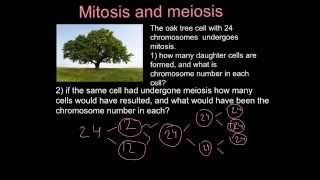
Mitosis and meiosis
-
 14:48
Haplodyploidy in honeybees
-
 7:12
Single stranded DNA
-
 4:51
How message RNA is read: duplets, triplets or tetraplets?
-
 4:11
Gregor Mendel, questions and facts
-
 8:21
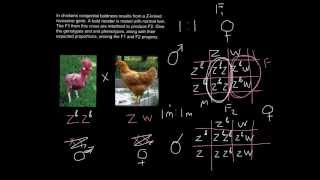
Сongenital baldness inheritance in birds ZZ/ZW