Directional, Stabilizing, Artificial, and Disruptive Selection Explained
747 views · Published 31 December 2018 · 6:18 · Indexed 2 October 2026
Channel: Nikolay's Genetics Lessons · 2018 · Education
Key Points
Natural selection increases or decreases biological traits within a population, thereby selecting for individuals with greater evolutionary fitness.
An individual with a high evolutionary fitness will provide more beneficial contributions to the gene pool of the next generation.
Relative fitness, which compares an organism’s fitness to the others in the population, allows researchers to establish how a population may evolve by determining which individuals are contributing additional offspring to the next generation.
Stabilizing selection, directional selection, diversifying selection, frequency -dependent selection, and sexual selection all contribute to the way natural selection can affect variation within a population.
Key Terms
natural selection: a process in which individual organisms or phenotypes that possess favorable traits are more likely to survive and reproduce
fecundity: number, rate, or capacity of offspring production
Darwinian fitness: the average contribution to the gene pool of the next generation that is made by an average individual of the specified genotype or phenotype
More from this channel
-
 5:53
Gene expression
5:53
Gene expression
-
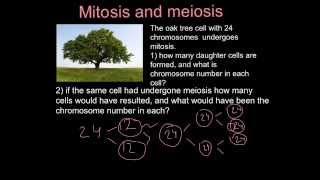 17:08
Mitosis and meiosis
17:08
Mitosis and meiosis
-
 4:11
Gregor Mendel, questions and facts
4:11
Gregor Mendel, questions and facts
-
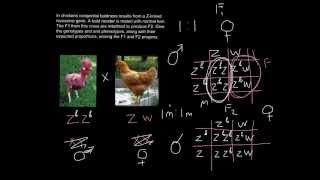 8:21
Сongenital baldness inheritance in birds ZZ/ZW
8:21
Сongenital baldness inheritance in birds ZZ/ZW
-
 4:38
Mendelian genetics, Punnett square problem solving (beginning level)
4:38
Mendelian genetics, Punnett square problem solving (beginning level)
-
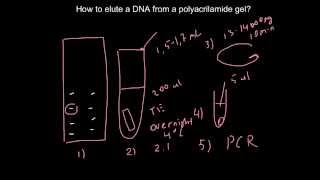 4:18
Easy way how to elute a DNA from a polyacrilamide gel
4:18
Easy way how to elute a DNA from a polyacrilamide gel
-
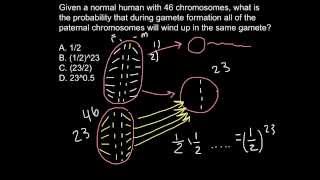 7:24
What is a probability for only paternal chromosomes to be inherited by the gamet?
7:24
What is a probability for only paternal chromosomes to be inherited by the gamet?
-
 4:01
What percent of a typical human's loci are heterozygous?
4:01
What percent of a typical human's loci are heterozygous?