Capturing Sound of an instrument : What Can You Really Tell?
442 views · Published 7 February 2016 · 41:20 · Indexed 6 November 2026
Channel: AuthenticSound · 2016 · Music
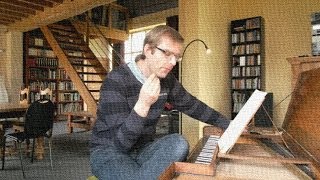
A clavichord. A piano. An harpsichord. A guitar. Any instrument.
How often do you describe the sound of a recorded instrument to your friends? The answer is simple: very often. We listen, a CD, an MP3, a YouTube recording,... in our car, at the computer, or in front of a nice hifi, and then... we form a detailed picture on sound characteristics of this or that instrument. Describe it. In real life, on facebook, on YouTube, through telephone, by sms,... Even compare it with what we know from real life.
But wait a minute. Is that really possible? O yes, I know that the recording industry sold their crappy digital stuff in the late 80ties by swearing that what you heard was linear, undistorted and thus natural. No colour added. And didn't we all buy that... nonsense?
Not that there is absolutely no truth in what the big Philips and Sony claimed. But even the best digital recording today is not reflecting what a real person experiences life with the use of his two ears. Nor an analogue recording can.

They can't, because a recording is the formation of a new reality.  The reason why we fall in the trap of connecting the recording to reality, is because we all (really: all) have incredible smart brains. They adjust the sound of a loudspeaker to that what we really know. And they to that so unbelievably fast, that we don't know that that is actually happening. The recording is a new world, but a world of beauty, why not, but often further from reality then we would like it to be.
All depending on tons of choices, decisions. But decisions are inevitable. And... they are the fun part of it, however important. And for you, if you are a musician, you'd better understand some elements of that process of recording, since those decisions will translate your performance to your audience.

I am far from a professional engineer. Not claiming that. But let me try, as a colleague musician, to show you the main elements that influence the sound of your instrument through a recording. Always. No matter what equipment you use. And... if you like the idea or not!

Hope you enjoyed this vlog, that turned out much longer than I'd planned!
Feel free to leave comments!

Wim

Thanks for your subscription to this channel!

https://www.youtube.com/channel/UC8vR6VP-3o_SpdnEBrpYGiQ?annotation_id=annotation_135749731&feature=iv&src_vid=5_hZ5ZW0eq0&sub_confirmation=1

Connect with me on:

Facebook
https://www.facebook.com/Authentic-Sound-601076609974303/

Twitter
https://twitter.com/_WimWinters

Website:
http://www.authenticsound.be
More from this channel
-
 6:24
J.S.Bach ::Prelude & Fugue in F Major, BWV 880 (WK II) :: Wim Winters, Clavichord
-
 21:48
V4: On my bookshelf: Ignaz Moscheles, diaries
-
 21:43
V5: Tuning (part 2): setting a (first) temperament
-
 36:59
V6: Beethoven's Sonata op.10/2: some aspects of interpretation
-
 21:01
V7: Tuning (part3): tuning the complete instrument
-
 29:04
V8: Tuning (part4): tuning a complete instrument ohne Worte
-
 11:08
v10: What's in a name: AUTHENTIC SOUND
-
 19:04
v17: Forkel, Bach and the clavichord (ENG)